Two weeks of looking — at the assortment, the consumer, the stores, the
numbers. Not a dashboard. The nine things that, taken together, explain why a brand this
admired is meeting friction at $10B — and where the next chapter is hiding.
A broader and deeper assortment than any competitor.
Lululemon carries far more distinct products — and far more colourways of
each — than the brands it competes with. What began as range has, at scale, become sprawl.
0
colour combinations (CCs) live online — 2.6× Alo, 5.4× Vuori, and 1.3× Nike
on comparable terms. Across 2,079 distinct products, spanning a $7–$598 range.
Colour combinations by category. Distinct colour combinations (CCs) live, split Women's / Men's / Accessories — Lululemon against its two closest DTC peers.
Lululemon vs Nike — colour combinations (CCs), apples-to-apples. Shoes, accessories, swimwear & licensed product excluded from both brands. Lululemon leads in women's; Nike leads in men's.
Where the colour combinations sit, by price. Each bubble is the number of colour combinations (CCs) a brand carries in that price band. Drill from category to product — set to Women's · Bottoms · Leggings to start.
Breadth was the advantage. At $10B, it reads as complexity.
Source · Manual extraction of brand DTC websites · 10 Feb 2026
02
Awareness → Consideration
Omnipresent — yet under-considered.
Lululemon is the second most-recognised brand in the category. But it converts
that awareness into consideration worse than any peer. Known by nearly everyone; weighed
by far fewer.
96% aware → of those, only 64% considered.
#2 of 12 on awareness · last of 12 on the step from aware to
considered. The gap persists across every gender and generation.
The whole category, across the funnel. Rank at each stage, among aware respondents (n = 2,000). Lululemon is #2 on awareness, falls to last of 12 on consideration, and recovers to #4 on purchase. Each line is one brand; values are the % at each step.
Why the aware don't consider. Barriers cited by aware non-considerers — Lululemon against its two closest peers. Price leads for all three; not being seen in person is the next gap.
The gap holds everywhere. Share of aware consumers who go on to consider — Lululemon trails both Alo and Vuori in each gender and at almost every age.
By gender
By age
Little that's distinctive. Brand-attribute associations among each brand's own buyers, ordered clockwise by category importance. Lululemon, Alo and Vuori overlap almost everywhere — few axes separate them.
The problem isn't being seen. It's the step from known to chosen.
Source · A&M Athleisure Consumer Insights Survey · Feb 2026 · n = 2,000
03
Complexity
The assortment may be working against the brand.
Breadth shows up twice over: in distinct products, and in the sheer number of
colour options on each. A single legging can run in dozens of near-identical shades — proliferation
that clutters the shelf and cannibalises full-price sell-through.
0
unique colourway options live — distinct colour chips across Lululemon's PDPs,
nearly double its nearest peer. The most choice in the category, by a wide margin.
Unique colourway options live. Count of distinct colour chips offered across each brand's product pages.
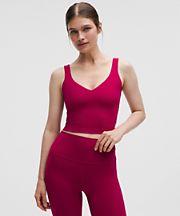
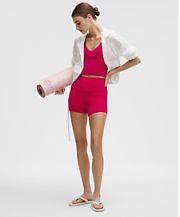
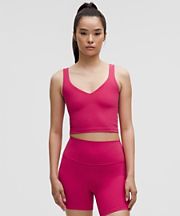
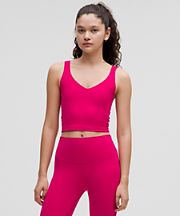
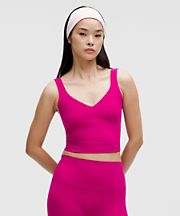
One legging, 46 colourways — five on sale at once. The Align Tank alone runs in
46 colour variations. Five near-identical pinks, all marked down together — choice the shopper can
barely tell apart, and margin given away to clear it.
Source · Manual extraction of brand DTC websites · 10 Feb 2026
04
Promotion
On sale — constantly, and across the board.
More colourways means more to clear. Lululemon now advertises over half its range as
discounted — a far higher share than Nike or Alo — and trains its shopper to wait for the markdown.
0%
of Lululemon's online range is advertised as discounted — vs ~45% at Nike and
~18% at Alo. A premium brand on near-permanent promotion.
Share of the range on sale. Percent of products advertised as discounted.
How deep the discounts go. Distribution of discount depth across each brand's marked-down items. Lululemon discounts broadly at 20–40% off; Vuori cuts deepest, well past 50%.
Breadth has quietly become a markdown machine — discounting margin away to clear the colours.
Source · Manual extraction of brand DTC websites (edited) · 17 Jun 2026
05
The experience
Built for heavy buyers — not light ones.
Lululemon's shoppers are promiscuous. They are in and out of competitor stores —
getting the product education, the discovery, the reassurance they don't get in Lululemon's own.
The store rewards the devoted regular; it does little to convert the curious.
0%
of Lululemon buyers also bought another brand in the last year. Just
2% buy Lululemon exclusively — the shopper is anything but loyal by default.
How many other brands a Lululemon buyer also bought. Almost no one buys
Lululemon alone — the typical buyer also shops three or more rivals in a year.
2% exclusive to Lululemon
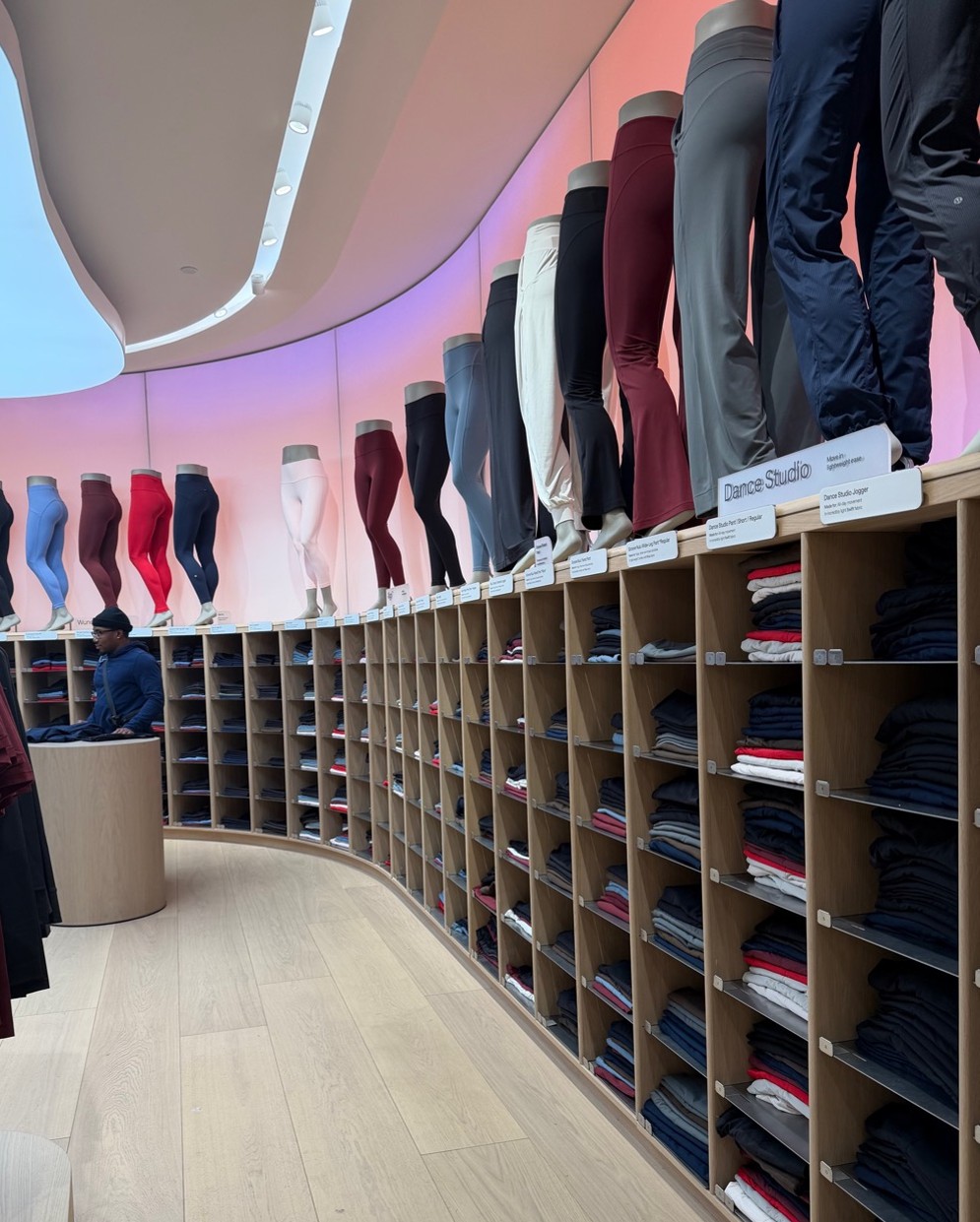
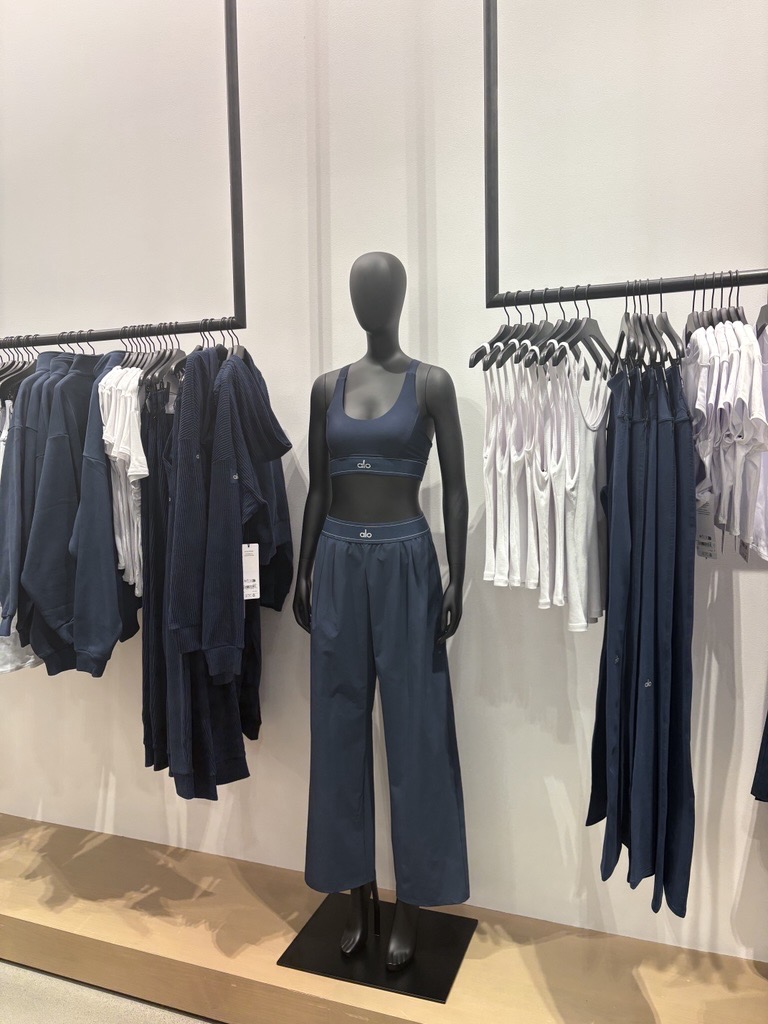
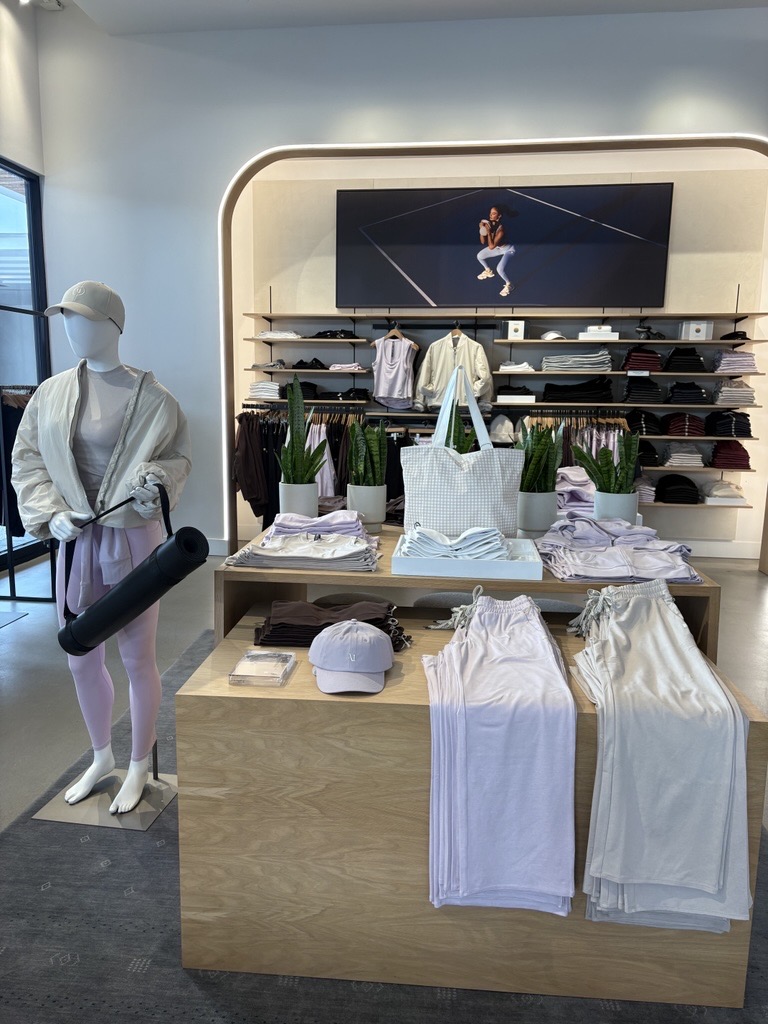
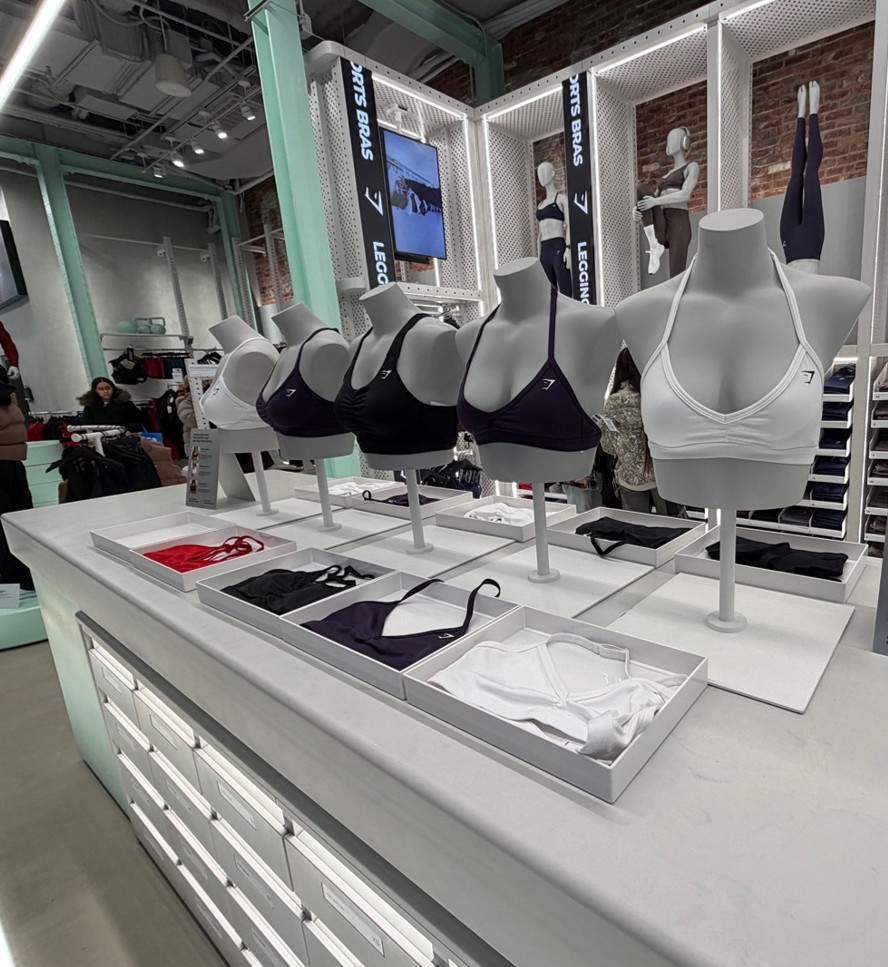
Why they wander — the store, side by side. Field visits across four cities. Competitors
curate and educate; Lululemon overwhelms. Hover the markers for what we saw.
LululemonSoho NY · Beverly Hills
AloSoho NY · Century City
VuoriGold Coast · Century City
GymsharkSoho NY
Keep winning the heavy buyer — but the growth is in the light buyer and the
non-buyer, who today learn the category in someone else's store.
Source · A&M Consumer Insights Survey (n = 691) & A&M field research, 26 stores · Feb 2026
06
Product engine
From expansion — to expansion and iteration.
The engine that built the brand added products. The next chapter also demands
relentless iteration of the core — the icons re-engineered, the fabrics advanced, not simply
multiplied into more options.
0%
of Lululemon's proprietary bestsellers still run on fabrics launched before 2017 —
vs just 8% at Alo. New fabrics keep getting added; the proven ones rarely get re-engineered.
Luon (2005) and its replacement Nulu (2015) were never meaningfully iterated — and the same sheerness
failure mode recurred 13 years apart.
Old fabric, still carrying the line. Share of each brand's proprietary bestsellers built on fabric platforms launched before 2017 — Lululemon leans hardest on aging fabric.
Lululemon35%
Alo8%
Innovation at this size is iteration and invention — together.
Source · Brand bestseller pages, manual extraction · Mar 2026
07
New categories
Entering new categories as a late follower.
Footwear — and the moves beyond it — put Lululemon in an unfamiliar seat:
arriving after the category is formed and the leaders are entrenched. A fundamentally different
game than the one it has always won.
A creator in apparel. A follower in footwear.
124 years behind New Balance, and after 41 established footwear brands
across four eras. Following needs a different operating muscle than creating — performance marketing
and wholesale from day one, not patient community-building.
Footwear: 124 years late. Forty-one established athletic-footwear brands across four eras — select an era to see who was already there. Lululemon arrives in 2022, alongside the other apparel brands now scrambling in.
A different operating muscle. Creating a category and entering a formed one demand opposite playbooks — and Lululemon now has to run both at once.
Category creator yoga · leggings
Invent the category and educate the consumer on why they need it
Community-led growth — ambassadors, local stores, word of mouth
Set the reference price — define what "premium" means
Patient capital; first-mover advantage compounds over time
The brand becomes the category
Category follower footwear · bags · outerwear
Differentiate, don't define — win on specific attributes vs known rivals
Compete for shelf — performance marketing & wholesale from day one
Justify the premium against Nike, Hoka and On
Urgency over patience — no first-mover edge to compound
Winning as a follower is a discipline the brand hasn't had to build — yet.
Source · A&M analysis of brand footwear-entry dates · 2026
08
Advertising
Under-investing in its own consideration.
For a brand this size and this premium, working media sits below the peer
benchmark. The quietest premium brand in its category — leaving consideration to compound
more slowly than it could.
Awareness is earned. Consideration is paid for.
Advertising runs ~5–6% of revenue — about half Nike's 8–10% — and a
fraction of the paid social of Vuori and Alo, even as the consideration gap (Finding 02) is the
brand's clearest growth lever.
Presence is compounding — for the challengers. Instagram follower growth, year on year. The loud brands are pulling away while Lululemon stays quiet.
Alo+81%
Vuori+34%
Gymshark+12%
Lululemon+7%
And running far fewer ads. Active ads in the Meta Ad Library at pull — Vuori runs roughly 6× more than Lululemon, Alo over 3×.
Vuori526
Alo295
Lululemon82
The cheapest growth on the table is the consideration it isn't buying.
Source · Meta Ad Library (19 Feb 2026), Social Blade & company 10-K filings
09
Culture
The advantage starts in the stores.
The strongest, most defensible asset that surfaced in the field wasn't a product.
It was the store teams — the people on the floor. A genuine, hard-to-copy edge, if the operating
model lets it scale.
The moat is the people on the floor.
Lululemon leads all six Glassdoor sub-categories — culture, D&I, work-life,
management, pay and career. The one advantage competitors can't simply buy — and the one most at
risk as the organisation scales and complexity rises.
The advantage, in the data. Retail associates who would recommend working here (Glassdoor) — Lululemon leads every peer, including Nike.
Lululemon80%
Nike59%
Vuori56%
Alo51%
Culture is the advantage that can't be copied — if it can be scaled.
Source · Glassdoor — US retail associates · Feb 2026
The throughline
Admired is not the same as chosen.
Eight findings, one pattern: a beloved brand whose own breadth, experience and silence
are slowing the step from awareness to growth. The diagnostic that follows turns each into a move.